• Skip to primary navigation
  • Skip to main content
  • Skip to primary sidebar
  • Skip to footer

Potomac Kempo

  • Adults
  • Kids
  • FAQ
  • Locations
  • About Kempo
  • Student Profiles
  • 2026 Summer Camp

balance

The Hidden Power of Stances: Building a Strong Foundation in Kempo

In Kempo, as in life, everything starts with a strong foundation. Just as a house built on sand will crumble, a martial artist without solid stances will struggle to generate power, maintain balance, and execute techniques effectively. Stances are the cornerstone of our training, and understanding their role is essential to progressing in Kempo.

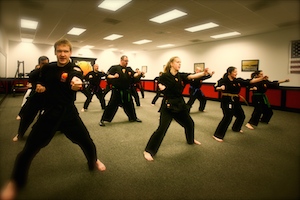
Potomac Kempo - The Hidden Power of Stances Building a Strong Foundation in Kempo

Why Stances Matter

A proper stance provides stability, balance, and control. Whether delivering a powerful strike or evading an attack, your stance dictates how effectively you move. A weak stance limits your ability to react, while a strong stance enables fluid transitions between offense and defense.

Additionally, your stance influences the force behind your techniques. When executed correctly, stances allow you to channel energy efficiently through your body, delivering strikes with greater precision and impact. A misplaced foot or a slight misalignment can dissipate that force, making your attacks weaker and your defenses vulnerable.

The Balance Between Strength and Mobility

It’s tempting to think that the deeper and wider the stance, the stronger it is. While low stances develop leg strength and discipline, real-world application demands mobility. The ability to transition smoothly between stances is just as critical as maintaining a solid base.

For example, training in deep stances strengthens the legs and improves endurance, but in sparring, a more upright stance allows for quick movements and rapid responses. Kempo practitioners must strike a balance between rooted power and fluid adaptability, ensuring they are neither too rigid nor too unstable.

Common Stance Mistakes and How to Fix Them

Even experienced martial artists can fall into bad habits when it comes to stances. Here are a few common mistakes and how to correct them:

  • Leaning Too Far Forward or Back – Your weight should be evenly distributed to maintain balance. If you lean too far in any direction, you become an easy target and limit your ability to react.
  • Over-Reliance on One Leg – A strong stance engages both legs equally. If you rely too much on your back leg or front leg, your movement becomes predictable and weakens your structure.
  • Lack of Core Engagement – A proper stance isn’t just about the legs; your core should be engaged to provide additional stability and control.
  • Feet Too Close Together – A narrow stance limits mobility and makes it easier to be knocked off balance. Make sure your stance provides a solid base without being overly rigid.

Drills to Improve Your Stance

To develop a stronger stance, consider incorporating these drills into your training routine:

  1. Horse Stance Holds – Hold a deep horse stance for increasing durations to build leg strength and endurance.
  2. Stance Transitions – Practice moving between forward, back, and side stances smoothly while maintaining balance.
  3. One-Legged Stance Training – Stand on one leg for extended periods to improve balance and core engagement.
  4. Weighted Stance Training – Perform stances while holding a weighted object to develop lower body strength and reinforce posture.

Stances as a Martial Philosophy

In Kempo, our stances are more than just physical positions—they embody discipline, patience, and control. A strong stance reflects a strong mindset. The ability to hold a stance under pressure mirrors the mental resilience needed in both training and life. Just as a well-practiced stance allows you to react effectively in combat, a strong foundation in discipline and focus enables you to navigate life’s challenges with confidence.

Final Thoughts

Your stance is the first thing you learn in martial arts and the foundation upon which all techniques are built. Whether you are a beginner or a seasoned martial artist, continually refining your stances will enhance your power, speed, and overall effectiveness in Kempo. Train them diligently, and they will serve you well both in the dojo and beyond.


Balance in Workouts: The Shaolin Crane Way

Striking the Right Balance Between Working Hard and Avoiding Injury

Finding the right balance in our workouts can be a challenge. We want to push ourselves hard enough to see results, but not so hard that we risk injury. This is where the concept of the “Shaolin Crane” can be helpful. In Shaolin Kempo, the Crane symbolizes balance, and finding balance in our workouts is key to achieving optimal results.

Balance in Workouts: The Shaolin Crane Way

When it comes to muscle fatigue, there is a sweet spot where we get the most benefit. If we don’t work out hard enough, we won’t see the results we are hoping for. On the other hand, if we strain our muscles too much, we risk injury and won’t be able to work out at all. The key is to find the optimal level of fatigue—which is typically towards the higher end.

Similarly, when we’re sick or injured, it’s important to find the right balance in our training. If we push ourselves too hard, we risk prolonging our illness or injury. But if we don’t move enough, we won’t get the necessary blood flow to heal as quickly as possible. Again, balance is key.

Of course, finding this balance is easier said than done. It often requires experimentation and listening to our bodies. We need to be mindful of our limitations and not push ourselves too hard too quickly. At the same time, we shouldn’t be too easy on ourselves and miss out on the benefits of pushing our limits.

In the end, our workouts need to be guided by wisdom and common sense. The Shaolin Crane reminds us to find balance in all things, including our fitness routines. By finding the right balance, we can achieve our goals and get up again tomorrow to do so again.

~Chris Santillo, Shihan

Competitions That Matter

Everyone knows when it is tournament time for our studios. The practice rings are set up in every studio, inviting everyone to be brave enough to step in the ring. Students start standing up in front of the class to demonstrate their skills while *gulp* everyone else is watching, waiting to applaud. A sense of team spirit surfaces as the demo team polishes its routine and each school rallies to be the one that brings home the tournament cup. A lot of preparation goes into this competition that, frankly, doesn’t matter.

It seems odd that while discussing a tournament that one might be inclined to indicate that competitions don’t matter — but hear us out!

Potomac Kempo Tournament Victory Medals Winning Smiles

Upon reflection, we must accept that the outcome of most of the competitions that we have entered into in our lives — be they 2nd-grade little league games, middle school science fairs, or high school track meets — has had no impact on our lives. How would your life be different if you had won/lost that little league game, science fair, or track meet? In all likelihood, it would not be any different at all.

We can hear some of you arguing already — “winning that game was a pivotal moment in my life,” or “my dream to work as an engineer started with that science fair….”

Let’s get down to the brass tacks. The life-directing experiences that come about from competitions lie not in the moment of victory or defeat, but in how you handled the months of preparation that led to that moment. Without those training grounds, we would be less than we are. You are stronger, faster, more able to take on life’s challenges by preparing to enter into the ring, not by winning or losing the game that happens there. The punchline is that the competitions themselves don’t matter.

Did you train with consistency? Did you reflect on how to improve your approach? Did you build strength and adaptability? Did you recover from your failures? Did you follow through until the key moment?

You see, it is through the process of preparing for competitions that don’t matter that we become ready to face the challenges that do matter. When Renshi Holly was in high school, she was on the swim team. Her record — whether it was good or bad — is lost in the mists of antiquity. However, a few years ago, before all of our sons knew how to swim, one of them fell in the deep end of the pool. With footwork born of countless sparring matches and a dive trained on that long forgotten swim team, she raced to save his life. That was a competion that mattered.

This character-building is why we gather twice a year to participate in a tournament and why you should start training now for the next one. The tournament won’t matter, but how you prepare for it will.

With respect,
Shihan Santillo

Primary Sidebar

Please join us for a complimentary class!

Call or text Geoff at ‭(571) 336-7021‬ or complete this short form and an instructor will contact you.

Loading


Testimonials

Kempo has helped me to focus. The discipline has helped me to be a better student in school. I am very determined. In the future, I will know to work hard.

— Six-year-old Purple Belt


Our Locations

Potomac Kempo - National Landing

National Landing
3650 S Glebe Rd 190
Arlington, VA 22202
Call or text Jonathan at
(571) 412-8585

Potomac Kempo - Old Towne

Old Towne
2050 Ballenger Avenue
Alexandria, VA 22314
Call or text Leo at
(571) 336-7010

Potomac Kempo - Huntington Metro

Huntington Metro
5914 N. Kings Highway
Alexandria, VA 22303
Call or text Geoff at
(571) 336-7021

Potomac Kempo - Fairlington

Fairlington
1535A N Quaker Lane
Alexandria, VA 22302
Call or text Colton at
(571) 336-7063

Potomac Kempo - Kingstowne

Kingstowne
5958 Kingstowne Ctr #110
Alexandria, VA 22315
Call or text Gary at
(703) 206-8064


Footer

Potomac Kempo Instructor Photo

Home Page

Potomac Kempo - Adults

Martial Arts for Adults

Potomac Kempo - Kids

Martial Arts for Kids

Potomac Kempo Studio Locations Alexandria Virginia

Studio Locations

Potomac Kempo - Leopard Character

About Kempo: Shaolin Leopard

The Shaolin Leopard Of the five Shaolin Animals, the Leopard is the only one crafted solely for martial purposes. That is to say, the other four Shaolin Animals had significant places in Chinese culture and mythology long before they were called on to be ‘martial’ animals. The Leopard, by contrast, has no cultural or mythological […]

More articles about Kempo

  • New Year, Stronger Foundations: How Kempo Builds Resilience
  • Reclaim Your Vitality: How Martial Arts Ignites Energy, Strength, and Well-Being
  • The Balance of Humility and Pride: Lessons from Kempo
  • From Challenge to Triumph: The Martial Arts Mindset
  • Three Complementary Training Methods for Martial Arts Success
  • Balance in Workouts: The Shaolin Crane Way
  • The Capitol Tournament Returns!
  • Three Awarded Fourth Degree Black Belts at Potomac Kempo
  • The Long Way to Belgium
  • Relax, you’re falling.
Potomac Kempo - Nick

Kempo Essay: Nick

I have now been training in Kempo for a little over four years and cannot say enough about how much I enjoy it. I have done other styles of martial arts, but feel I have found my niche with Kempo. There are multiple benefits to martial arts training. The most obvious benefit is knowledge of […]

More Student Profiles

  • Kempo Essay: Emily
  • Kempo Essay: Marta
  • Kempo Essay: Jordan
  • Kempo Essay: Ally
  • Kempo Essay: Lisa
  • Kempo Essay: Auna
  • Kempo Essay: Sara
  • Kempo Essay: Ricky
  • Student Profile: Brett
  • Student Profile: Rachel & Jonathan

Copyright © 2026 · Executive Pro on Genesis Framework · WordPress · Log in